
What Hospitality Can Teach the Workplace
There’s a very clear shift happening in how we think about progressive office space.
For years, workplace design has been driven by efficiency, density, and optimization. How many seats? How much square footage? How do we fit more into less? There are many companies still focusing too much on only these questions, but it misses something fundamental that is central to how we’ve always approached design. People experience space as a sequence of moments unfolding throughout their day: Arrival. Connection. Focus. Collaboration. Repeat.
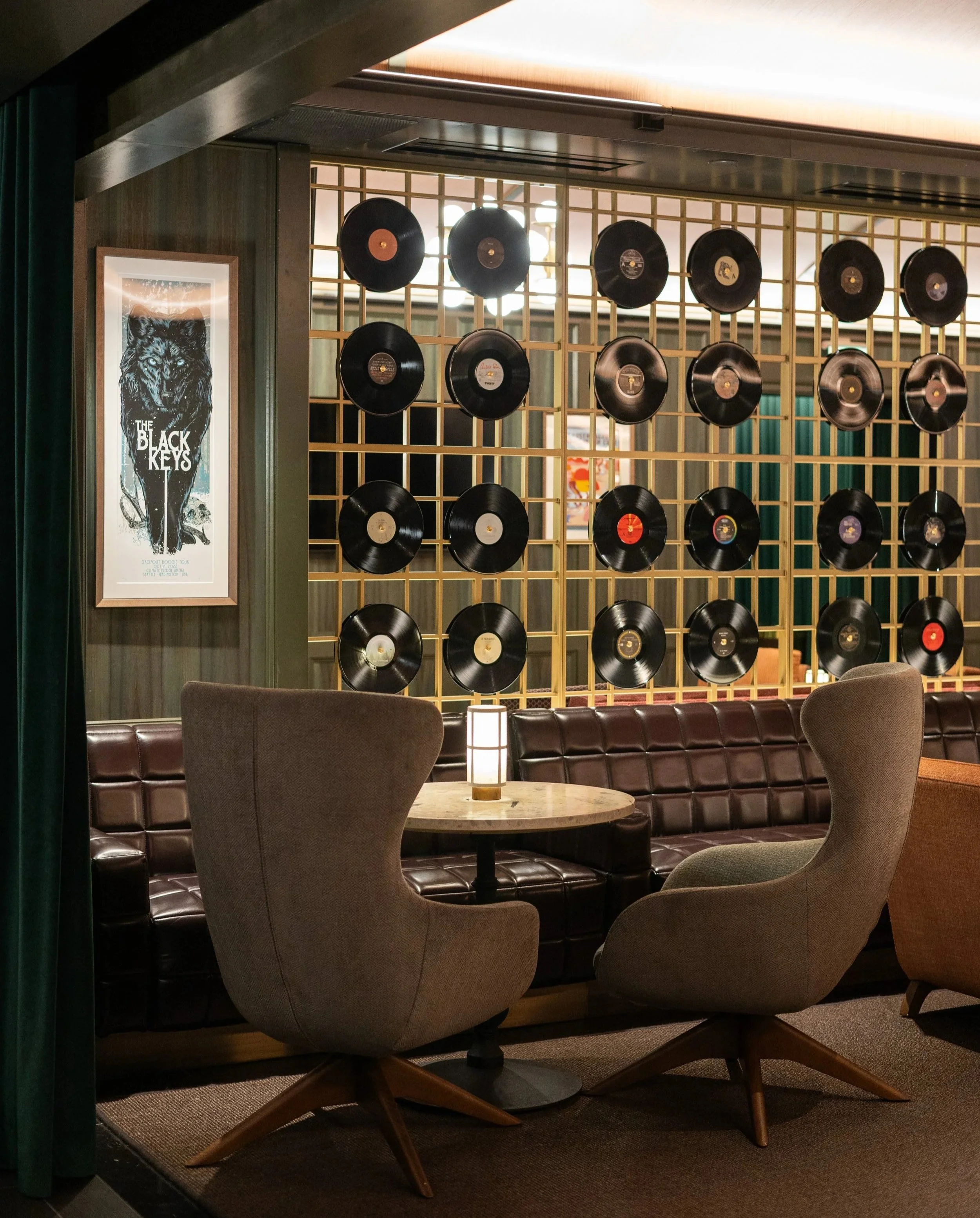
Visually rich and layered, thoughtful use of materials, decor and lighting shifts the overall experience to one of engagement.
Hospitality design understands this intrinsically. It begins with the human journey, shaping environments around how people feel when they arrive, how they move through space, and why they choose to come back. Research in hospitality and experience design describes this as a shift from static environments to dynamic, responsive journeys that align with human behavior, community rhythms, and emotional experience (From Spaces to Experiences). It starts with deep research into the end-user, to understand what they are looking for and what will bring them back to the space again and again.
It is important to clarify that hospitality is not a style. It is not defined by dim lighting, a coffee bar, or more trendy material palettes. At its core, hospitality is a discipline rooted in welcome, comfort, belonging, and care. It asks simple but powerful questions: how does this space make someone feel, and how well does it support them over time? When these values are applied to the workplace, the office begins to shift from a container for work into something more considerable: It becomes a host.
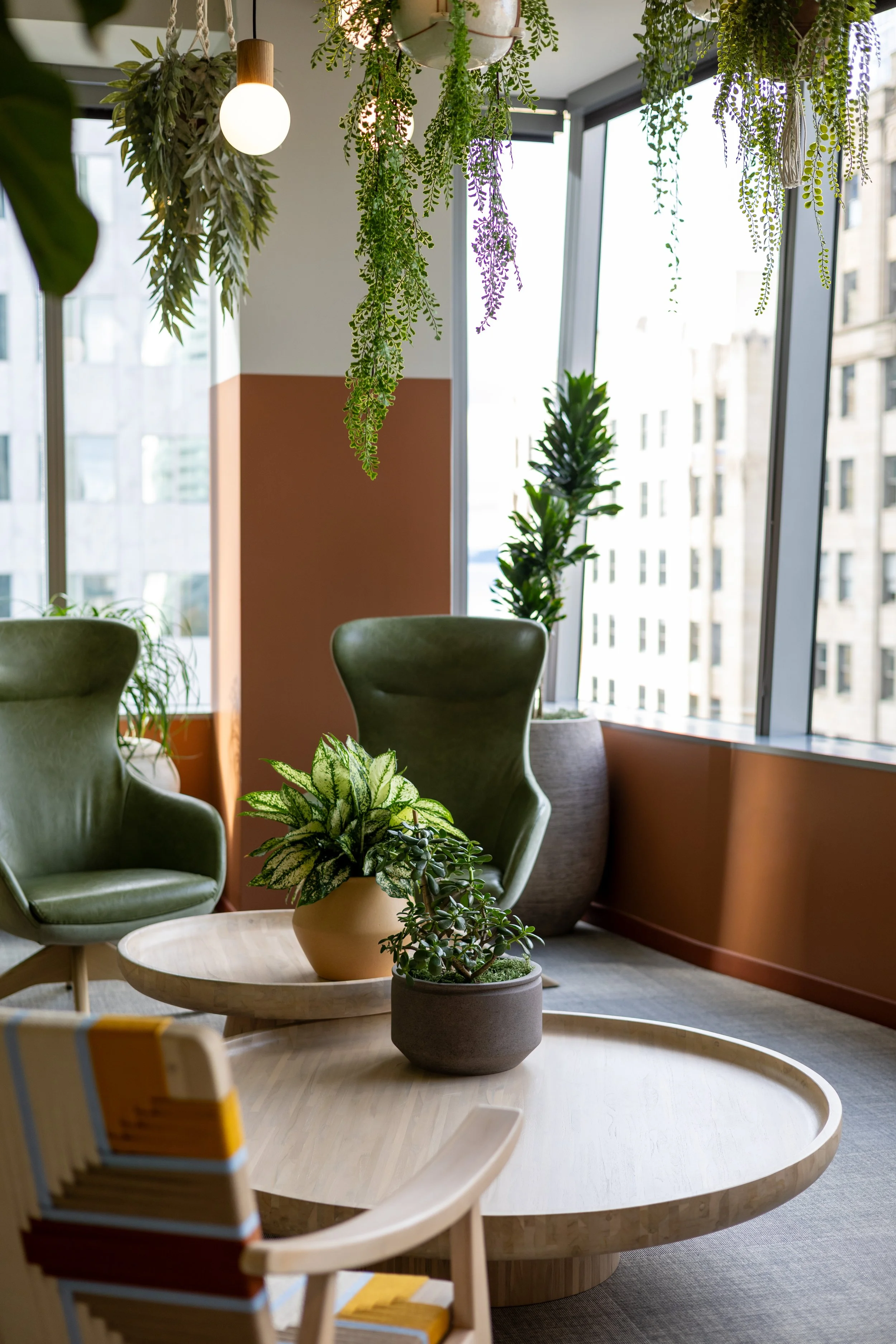
Layers of plants, natural color and textures infuse a restorative quality to the environment.
When we think about the workplace as something that hosts people, the priorities begin to change. Arrival is no longer an afterthought but a meaningful threshold. It becomes an opportunity to create clarity and ease, with intuitive wayfinding, welcoming moments, and cues that help people orient themselves and plan their day. Atmosphere becomes a tool rather than a byproduct, with lighting, acoustics, materials, and scale working together to support calm, energy, or focus depending on the setting.
Belonging also takes on a different level of importance. Spaces that reflect the identity, culture, and context of an organization help people feel connected to something larger than themselves rather than moving through an anonymous environment (Design Movements That Defined Hospitality in 2025). Choice becomes essential, offering a range of settings that allow individuals to decide how they want to work, whether that means quiet concentration, collaborative energy, or informal interaction. Research shows that access to varied work settings and control over one’s environment is strongly tied to perceived workplace effectiveness and satisfaction (CBRE). Restoration is no longer seen as optional, but as a necessary part of sustaining focus and wellbeing, supported through access to natural light, views, and nature (Goncalves et al.). Underlying all of this is a sense of service, where the environment feels intuitive and supportive, reducing friction and making the day easier to navigate (JLL).
These qualities are not luxuries. They are signals that communicate to people that they were considered in the design of the space. That sense of consideration has a meaningful impact on how people engage with their environment and with each other.
This shift is especially relevant given how dramatically workplace behavior has changed. Many people now complete focused, individual work at home, coming into the office primarily for connection, collaboration, and shared experience. Despite this, a significant portion of office space is still designed around older models that prioritize individual desks over collective interaction. Overlaying our experience in hospitality, we’re able to reframe the office as a place of experience rather than obligation.
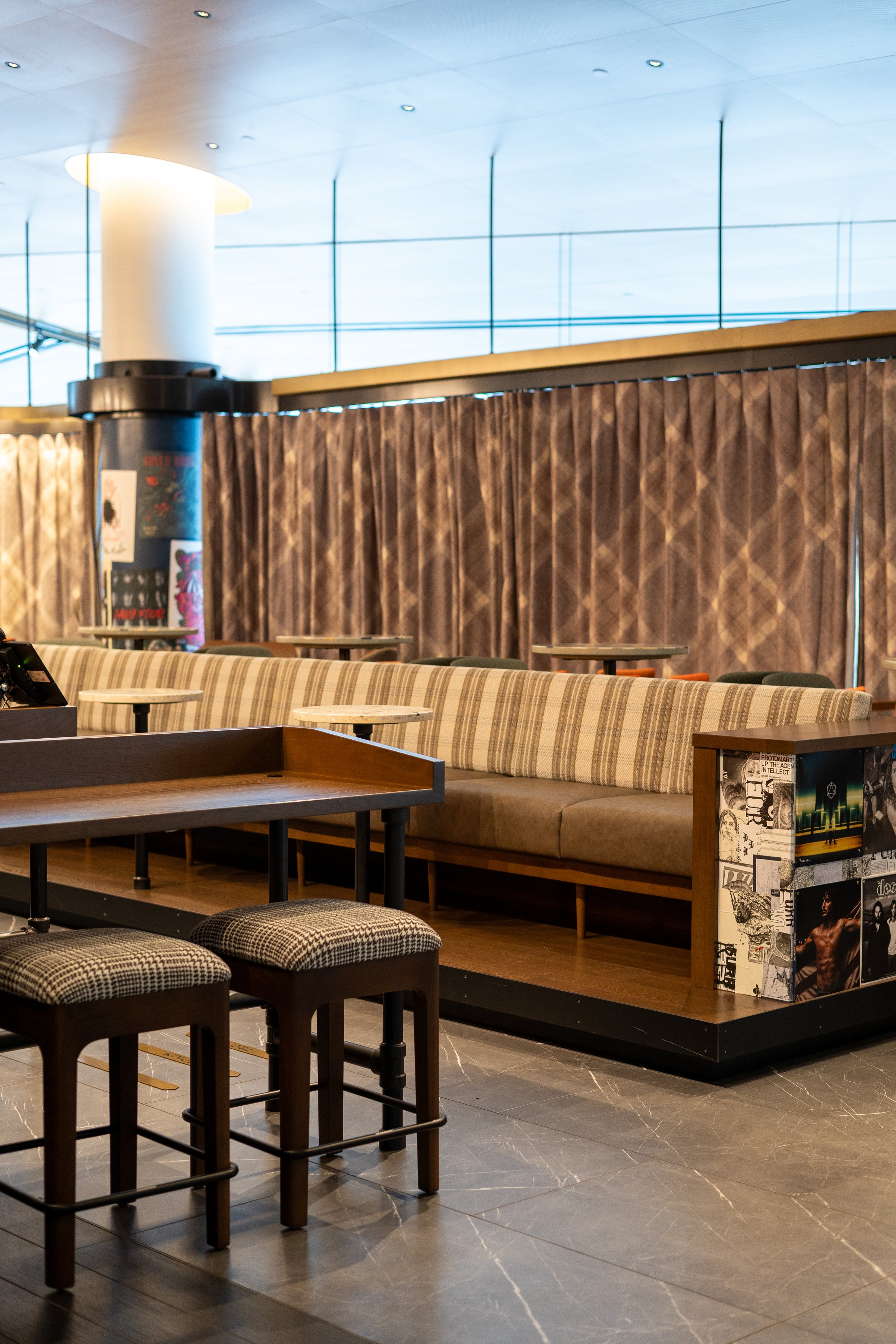
Spaces with a strong point of view, character and personality support better engagement and interest.
This reframing shows up in subtle but important ways. Workplaces begin to offer a diversity of settings rather than a single dominant layout. Spaces are organized around energy and mood rather than rigid function. Materials and lighting are used to support comfort and reduce stress, creating environments that feel more grounded and human. When people are given meaningful choice in how they use space, the impact becomes measurable. Studies show that employees with greater control over their environment report higher levels of productivity, satisfaction, and overall workplace effectiveness (Deloitte).
Still, the most important outcome is not a metric. It is a feeling. It is the sense that a space is there to support you rather than asking something from you.
There is often a tendency in commercial design to begin with performance metrics such as utilization, efficiency, and cost. While these are important considerations, they are ultimately outcomes rather than starting points. Hospitality-driven thinking reverses that sequence by beginning with the quality of human experience and allowing measurable results to follow. Research consistently shows that environments that support wellbeing, connection, and comfort contribute to higher levels of engagement, and those gains in engagement are linked to improvements in productivity, retention, and overall organizational performance (more on this).
This does not suggest that design alone drives these outcomes, but it does reinforce that space plays a meaningful role in shaping the conditions that make them possible.
There is also an important caution in how hospitality is applied. When reduced to surface-level gestures without deeper intention, it becomes performative. A lounge without purpose, a trendy finish palette without meaning, often fail to resonate because they are disconnected from how people actually work and move through their day. True hospitality requires a thoughtful approach. It begins with listening, understanding daily patterns, and defining what people are looking for. It continues through design decisions that balance social energy with quiet focus, and it extends into operations that ensure spaces remain responsive over time.
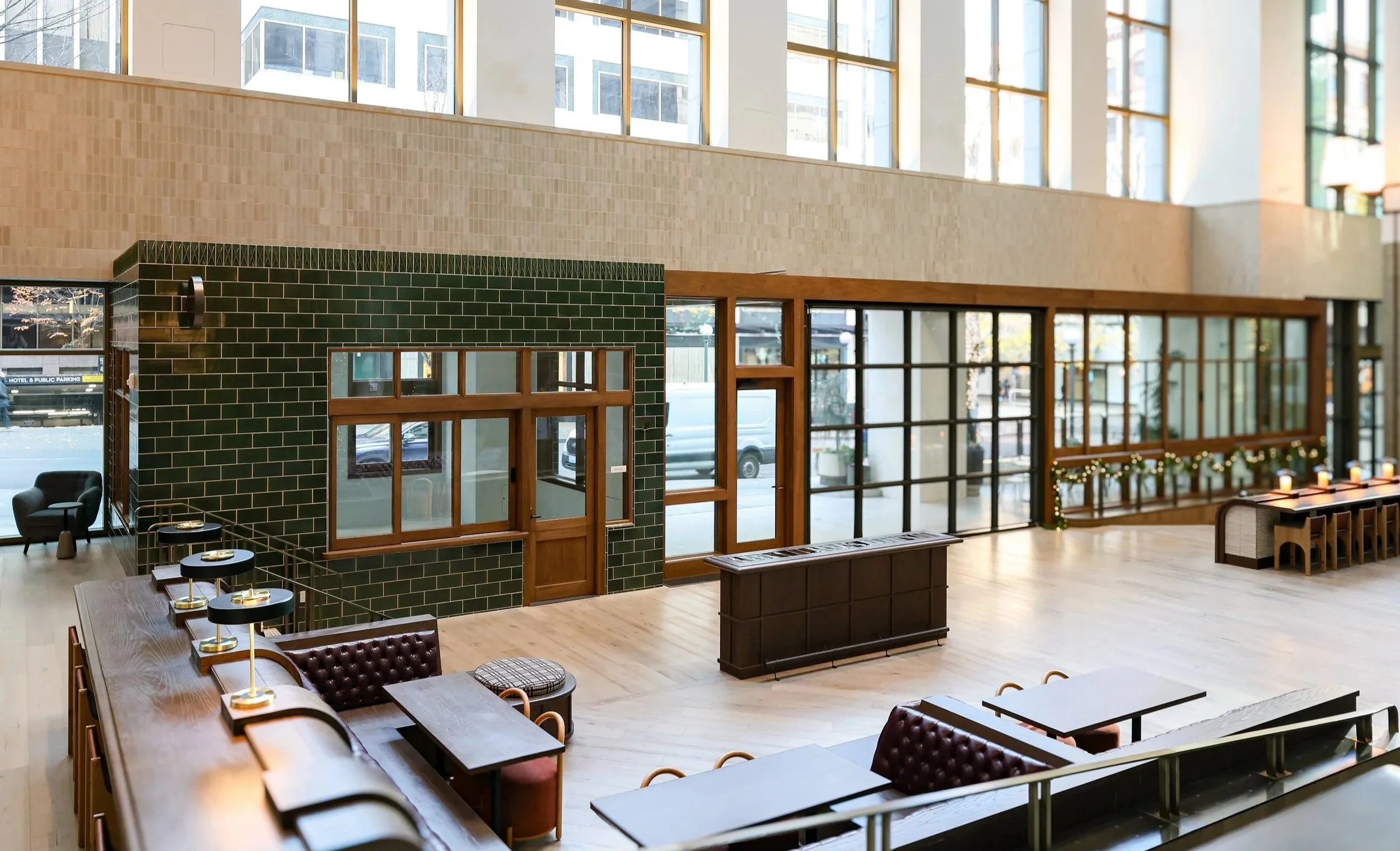
Variety of furniture settings, materials and experiences supports the “playground” experience of “where do we want to work today?”
At its best, hospitality-led design is not about making offices feel like hotels. It is about making them feel human.
At Cureo, we believe that thoughtful design is layered, connecting big-picture ideas with the details that shape everyday experience. We seek to understand how people actually live and work in their space. We consider not only functional needs, but experiential ones. We strive to translate those insights into spaces that feel intentional and meaningful. Hospitality aligns naturally with this perspective because it is inherently about continuity. It considers how a person moves through space, how their needs shift throughout the day, and how each moment contributes to a larger sense of place.
When those layers come together, the impact can be subtle but it is always impactful. A workplace begins to feel less like an obligation and more like a destination. It becomes a place where people want to be, not because they have to, but because they want to be there.
That may be the real opportunity in front of us. Not simply to make offices more efficient or more visually appealing, but to make them more thoughtful, more generous, and more responsive to the people who use them.
If you are interested in seeing how our unique blend of hospitality experience and deep workplace knowledge can bring more purpose and welcome to your space, we would love to chat. Let’s work together.