
Cureosities | The Workplace Ecosystem
A Post-Pandemic Case Study in Sensory-Rich, Data-Driven Workplace Design
As organizations around the world continue to redefine the role of the office, a new question has emerged. Rather than asking how often people should be present, leading companies are asking what kind of environment makes presence meaningful.
For our client, a global technology company, the answer was not a return to pre-pandemic office model or rigid attendance expectations. Instead, the organization partnered with us to reimagine its new headquarters as a human-centered ecosystem. The result is a multi-floor office environment within a new building, designed to support focus, connection, and well-being through choice, sensory awareness, and behavioral insight.
Developed during a period of rapid workplace change, the project offers a nuanced response to post-pandemic work. It positions the office not as a container for desks, but as an adaptable system that responds to how people think, feel, and work throughout the day.
Designing from Data and Lived Experience
The design process began with a dual lens. Quantitative data was gathered through surveys, interviews, programming workshops, and occupancy sensor studies, while qualitative insights captured how employees experienced their workday emotionally and cognitively. Together, these inputs revealed a critical shift in behavior.
Most employees no longer needed a desk for continuous use, but they still desired a sense of belonging and access to spaces that supported different modes of work. Focus, collaboration, restoration, and social connection each required distinct environments. Designing for a single “ideal” work setting just wasn’t viable.
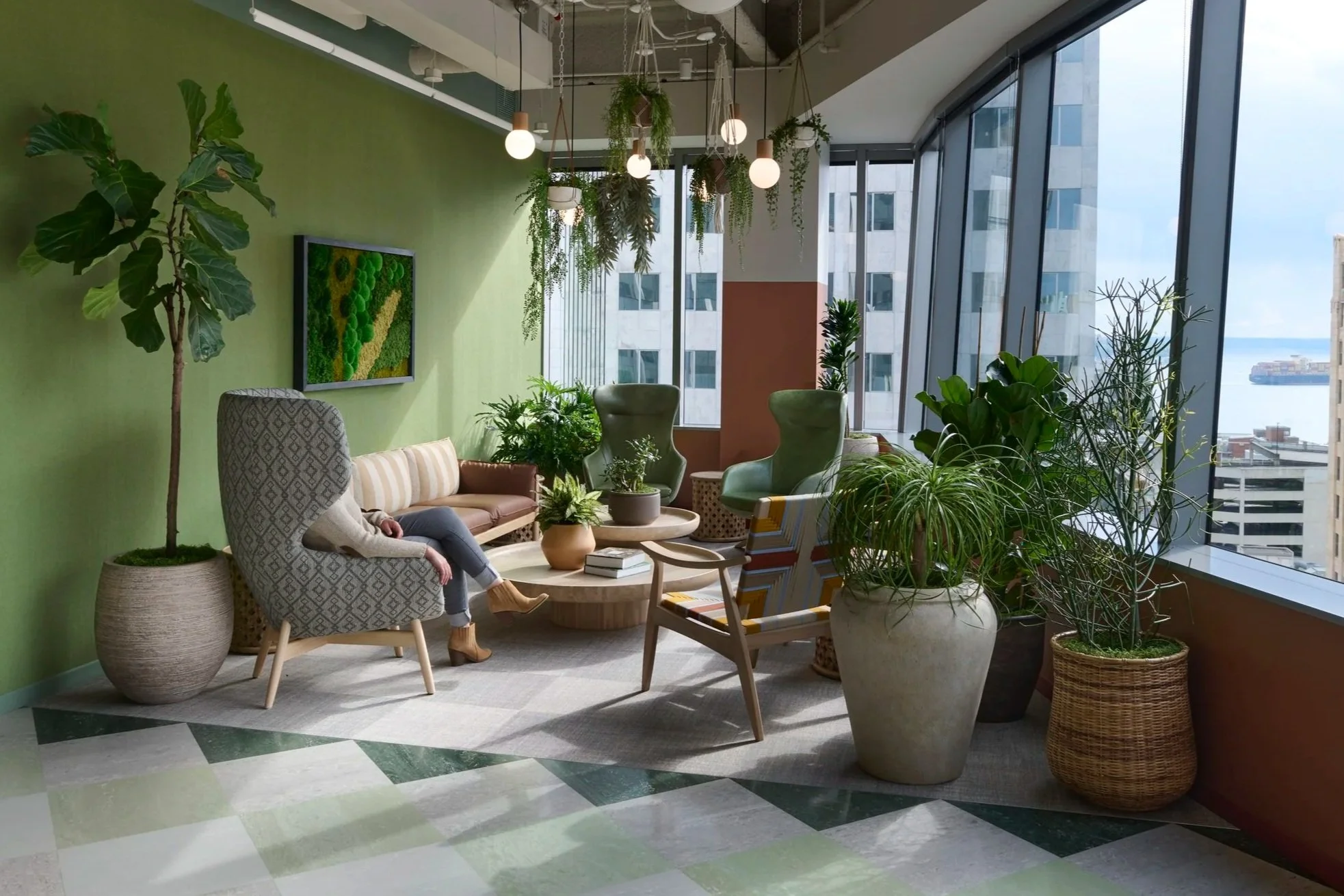
Rather than organizing the office around fixed zones of desking, we approached the workplace as an interconnected ecosystem. In addition to assigned team workspace, employees are able to move fluidly between environments based on task, energy, and sensory need. This flexibility supports autonomy while reinforcing trust, a key factor in successful return-to-office strategies.
|”When workplaces are designed in response to human behavior, they stop feeling prescribed and start feeling lived-in. The most successful workspaces adapt to people, not the other way around.
- Melissa Maddux Renner, AIA, Founder + Principal of Cureo Architecture + Design |

Neurodiversity and Sensory-Aware Design
A core objective of the project was to create an environment that supports a wide spectrum of cognitive and sensory preferences. Neurodiverse design strategies are woven throughout the workplace rather than isolated to specific rooms.
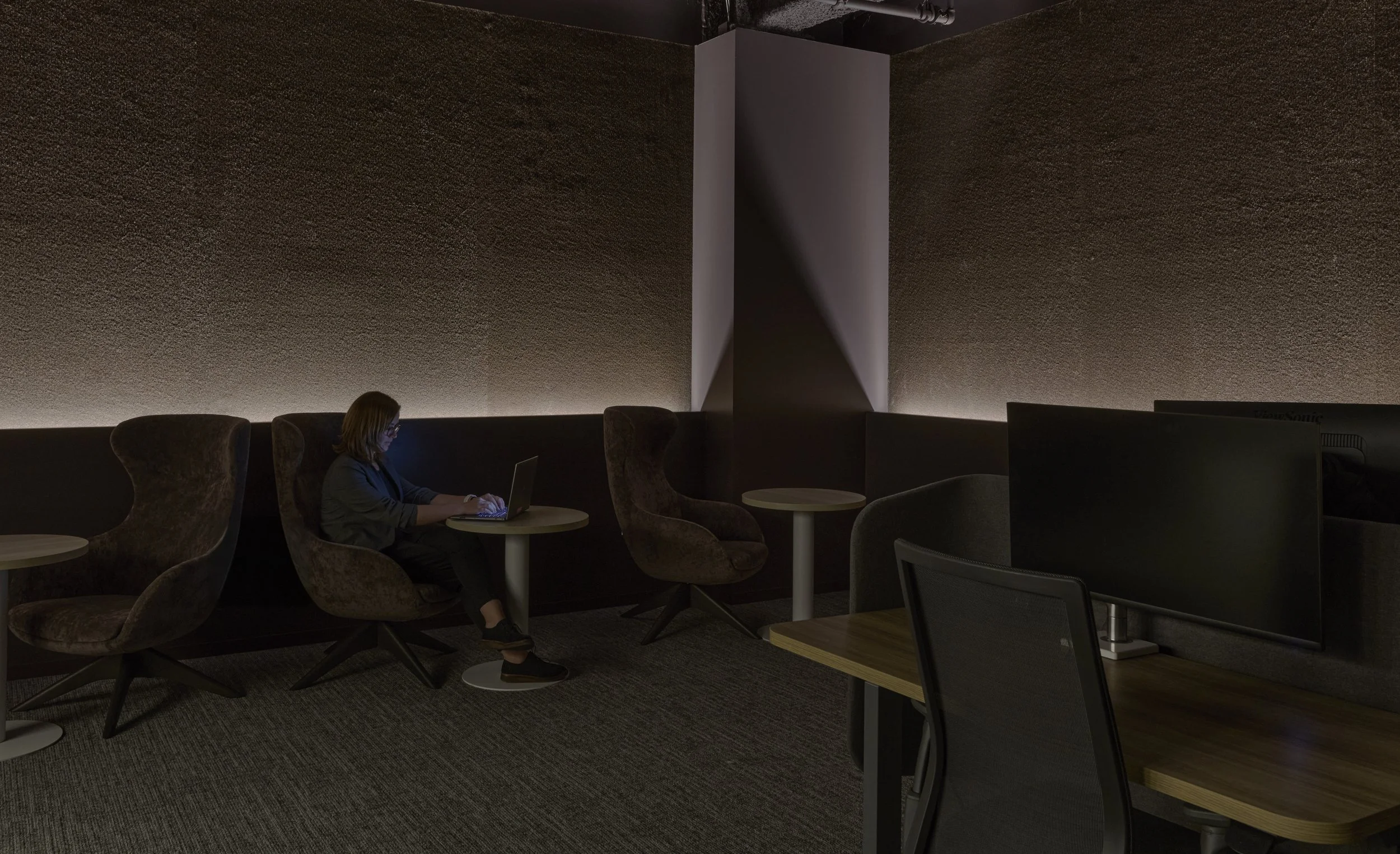
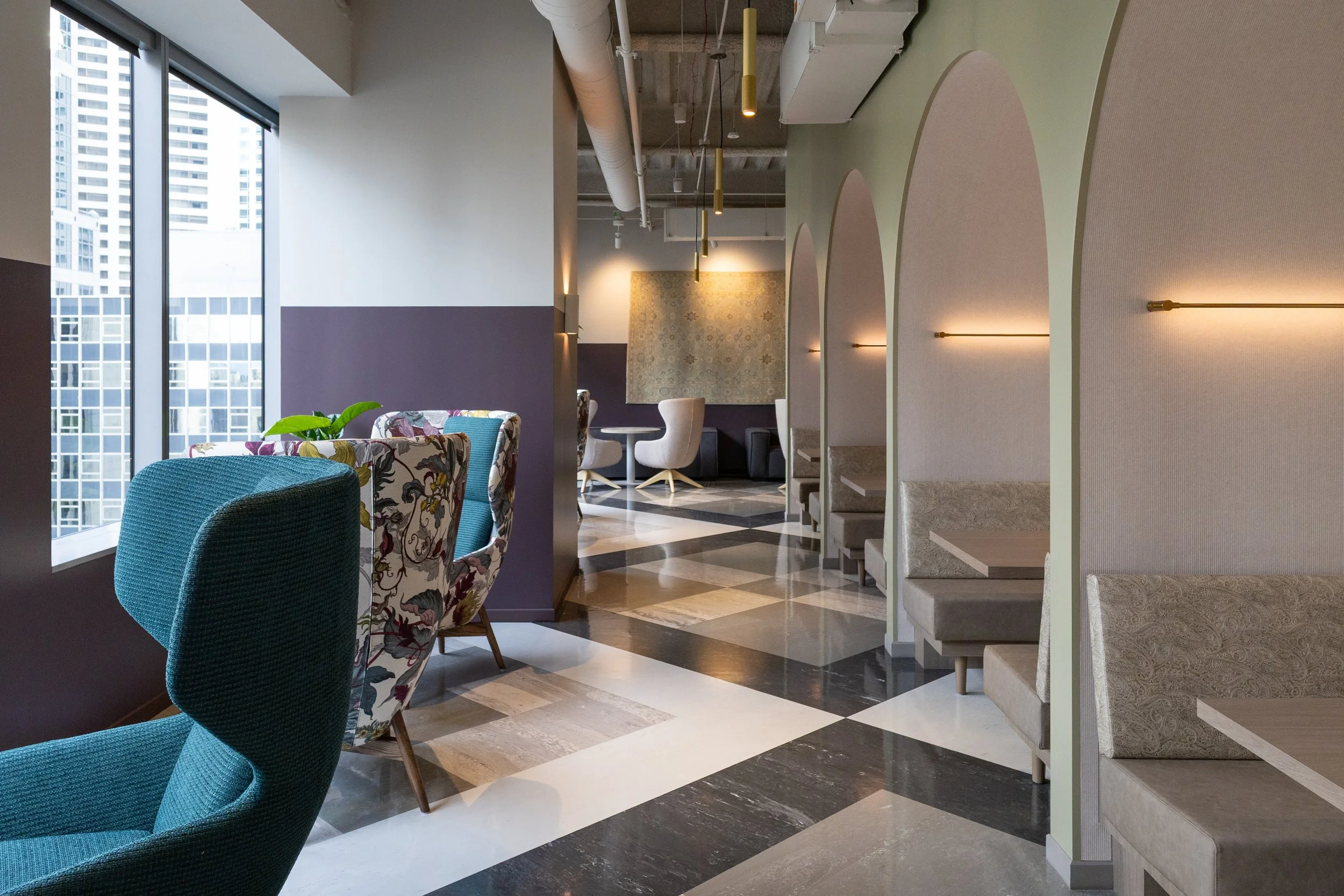
Fully enclosed Quiet Rooms and a light-shielded Dark Room provide refuge for deep focus and sensory regulation. Semi-enclosed work nooks offer balance, allowing visual privacy without complete separation. These environments are complemented by layered lighting, tactile wallcoverings, and carefully calibrated acoustics that reduce cognitive load.
Sensory considerations extend beyond sound and light. Subtle scent cues, material texture, and spatial rhythm were intentionally designed to create a calming yet engaging experience. The result is a workplace that acknowledges sensory diversity as a driver of productivity rather than a constraint.
Hospitality as a Framework for Belonging
Hospitality principles played a significant role in shaping the overall experience of the workplace. Instead of prioritizing efficiency alone, the office was designed to feel welcoming, intuitive, and emotionally resonant.
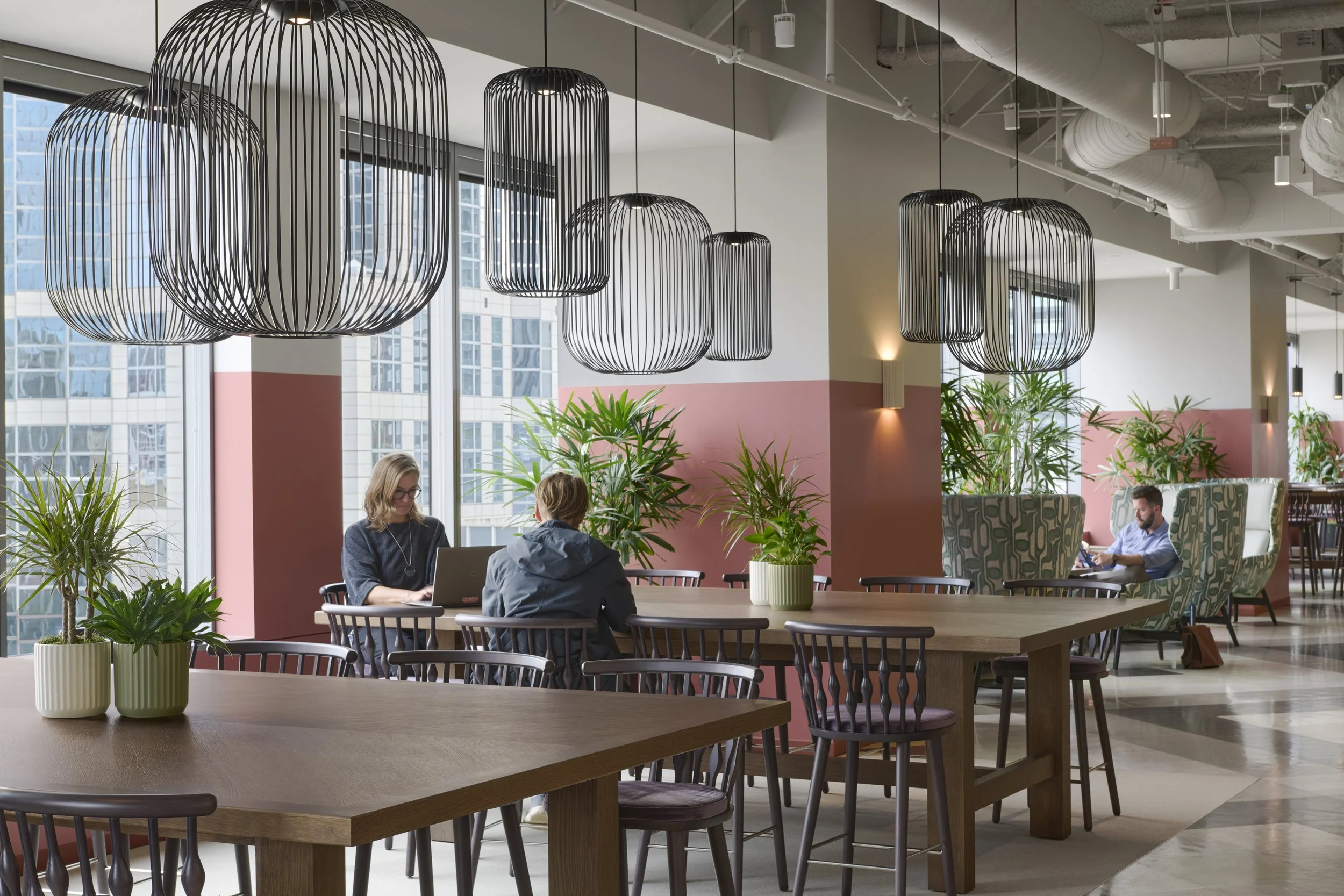
At the center of the ecosystem is a large gathering hub inspired by public markets around the world. This space functions as the social heart of the office, supporting company-wide events, shared meals, informal coworking, and spontaneous interaction. Smaller café-style spaces and breakout zones are distributed throughout the floors, offering varying degrees of energy and intimacy.
This layered approach mirrors hospitality environments more than traditional corporate offices. Employees are encouraged to choose where and how they engage, creating a sense of agency and comfort that supports longer, more meaningful time onsite.

Global Regionalism and Material Storytelling
The global nature of the company’s work is reflected through a layered design narrative that spans all floors. Distinct material palettes draw inspiration from global regions, expressed through color, pattern, texture, and planting strategies. Furniture selections were curated to align with these palettes, often incorporating pieces and materials influenced by the regions that shaped each zone’s identity.
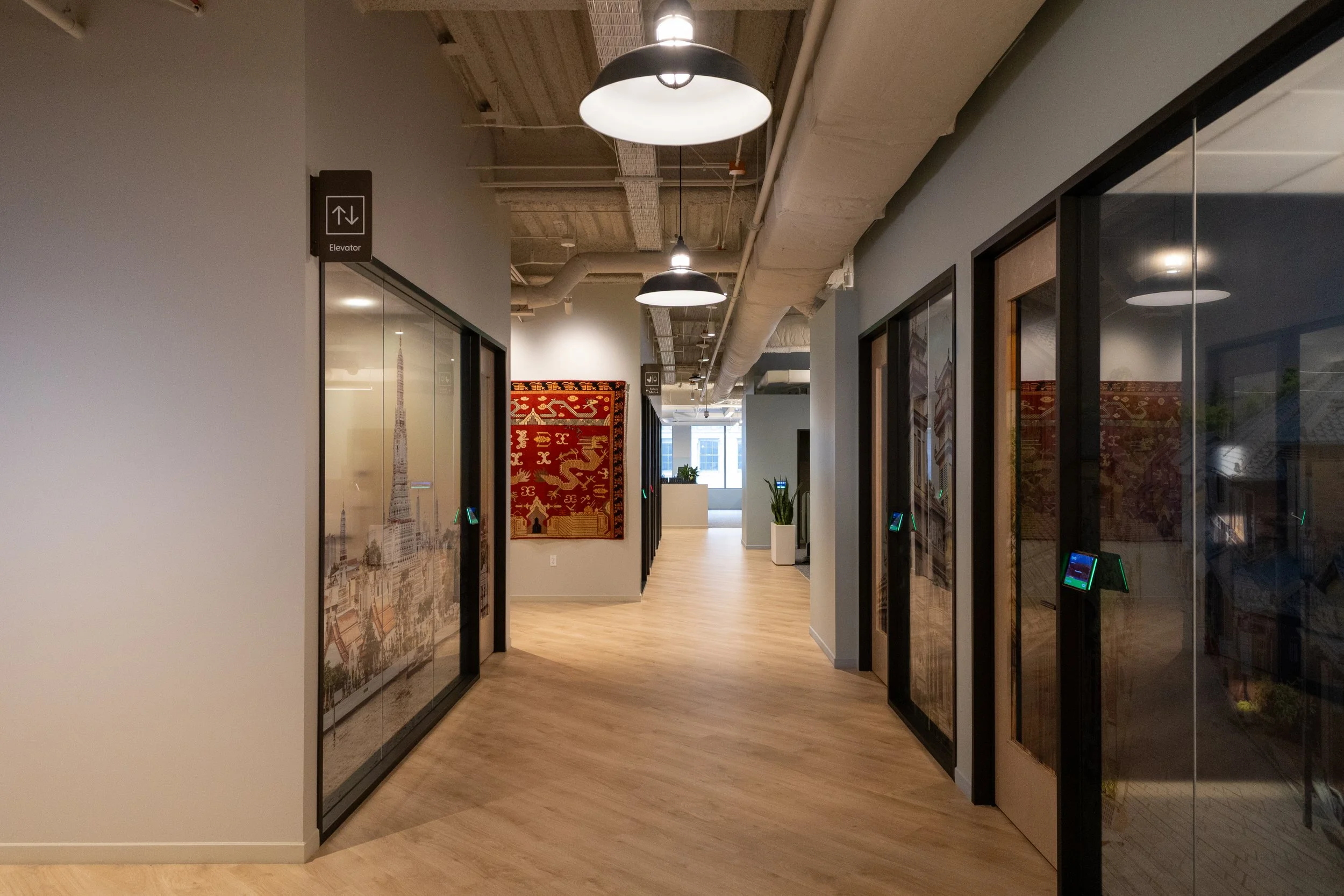
Conference rooms are named for cities around the world and layered with subtle cultural references. Rather than literal representation, the design relies on abstraction and material storytelling to evoke a sense of place. This approach allows the workplace to celebrate global connectivity while maintaining cohesion and restraint.
“We think of global regionalism as a balance between the universal and the specific. By using materials thoughtfully, we can reference culture, climate, and craft in subtle ways that feel authentic—without turning space into a literal or themed expression.”
Sustainability Through Adaptive Reuse
Sustainability was addressed not through surface-level gestures, but through strategic decisions about reuse and longevity. Some of the floors had been previously constructed as speculative office space that did not align with the company’s needs. Rather than pursuing a full demolition and rebuild, the project prioritized adaptive reuse. Existing mechanical and electrical systems, lighting, ceilings, casework, appliances, and furniture were retained and integrated wherever possible. This approach reduced material waste, controlled costs, and extended the life of previous investments.
The project was delivered in close strategic collaboration with Recon Management and was built by Skyline Construction, whose role ensured that sustainability goals were balanced with constructability, schedule, and budget realities. Design ambition and practical execution moved forward together, reinforcing the idea that responsible design is both creative and disciplined.
The Office as a Living System
Ultimately, this project reflects a broader shift in how organizations think about the workplace. The office is no longer a static destination defined by square footage or seating ratios. It is a living system that must support a wide range of human needs, adapt over time, and remain resilient in the face of ongoing change.
By grounding design decisions in data, sensory awareness, and inclusive thinking, we helped create a workplace ecosystem that supports focus, connection, and belonging. It offers a compelling model for how the global office can evolve beyond function alone and toward environments that genuinely support the people who use them.